SnoozoLearn

SCIENCE & NATURE · FREE FOR NOW

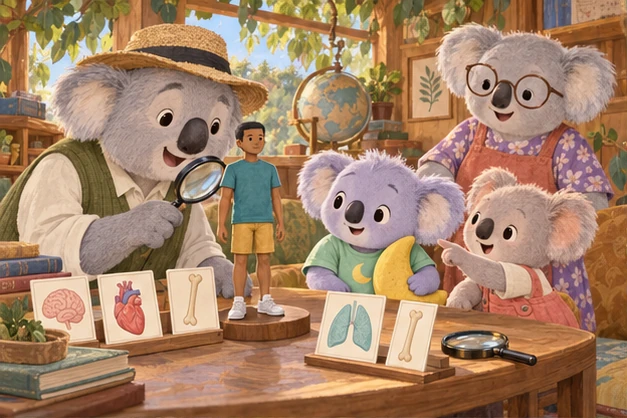
Snoozo and the Body Detectives

Switch the layers of a human body model and investigate bones, joints, tendons, skin layers and the teamwork of lungs, heart and brain.

स्नूज़ो और शरीर के जासूस

Ages 9–12story~9 minNo guest sign-in needed
Grandma unveils a layered human anatomy teaching model while Snoozo and his koala family prepare detective notebooks and clue cards.

6 STORY PAGES · A PREVIEW TO READ TOGETHER

Step into the story

Page 1

Grandma unveils a layered human anatomy teaching model while Snoozo and his koala family prepare detective notebooks and clue cards.

Grandma Blossom unveiled a human anatomy teaching model. Grandpa Oak set out clue cards. Mum Fern, Dad Moss and Zippy became Body Detectives; Snoozo brought his notebook and moon cushion. “Our koala family is investigating human anatomy,” Grandma said. “This model shows layers we cannot see from outside.” The first clue read: I SUPPORT THE BODY. Snoozo leaned closer. “A cushion?” “A framework inside!” laughed Zippy.

Talk together: Switch the model’s layers and predict which team forms a supporting framework. Explain the clue using a picture or your own words.
Page 2

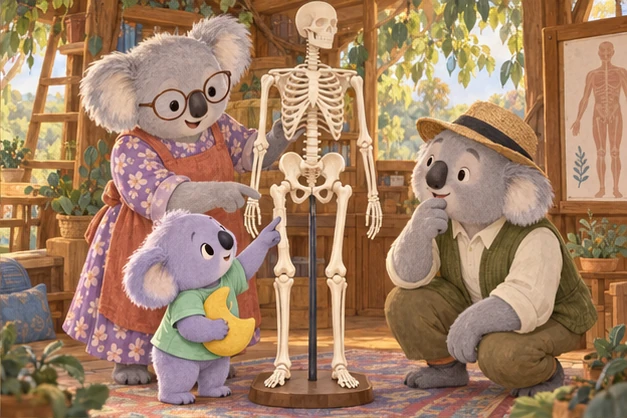
A friendly human skeleton teaching model highlights the skull, ribs and femur as the family matches bones with their jobs.

Grandpa revealed the model’s skeleton. “The skull surrounds and protects the brain. Ribs help protect the heart and lungs. The femur is the thigh bone, between hip and knee.” Dad gave each bone a clue card: PROTECT, PROTECT, SUPPORT AND MOVE. “Bones have different jobs,” Snoozo wrote. Grandma nodded. “And a joint is where bones meet. Some joints move a lot; others, like most skull joints, hardly move at all.”

Talk together: Find skull, ribs and femur on the human model. Match each location with its job. What makes an elbow joint different from most skull joints?

Page 3

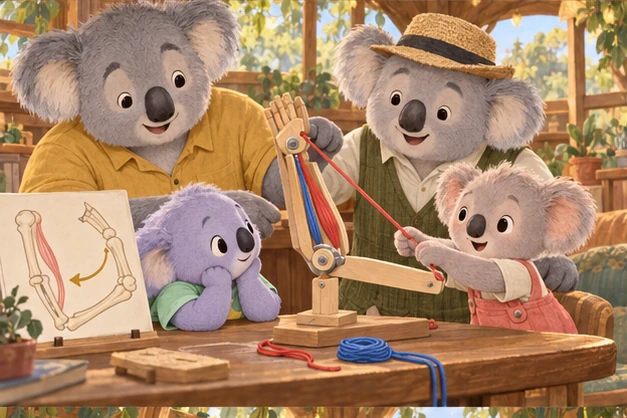
Ribbon muscles and cord tendons on a human elbow model show how a muscle’s pull moves a bone at a joint.

Mum added ribbon muscles and cord tendons to the model’s elbow. “When a skeletal muscle contracts, it shortens and pulls. Tendons connect muscle to bone, passing that pull along.” Dad gently operated the model. Its elbow bent at the joint. “Muscles pull bones; they do not push them back,” said Grandma. “Another muscle can pull for the return movement.” Snoozo drew arrows. “Connector, pull, movement. The clue is a team!”

Talk together: Trace muscle → tendon → bone on the model. Explain why the joint is also needed. Watching or imagining the model is enough; no strength test or large movement is needed.

Ages 9–12story~10 min

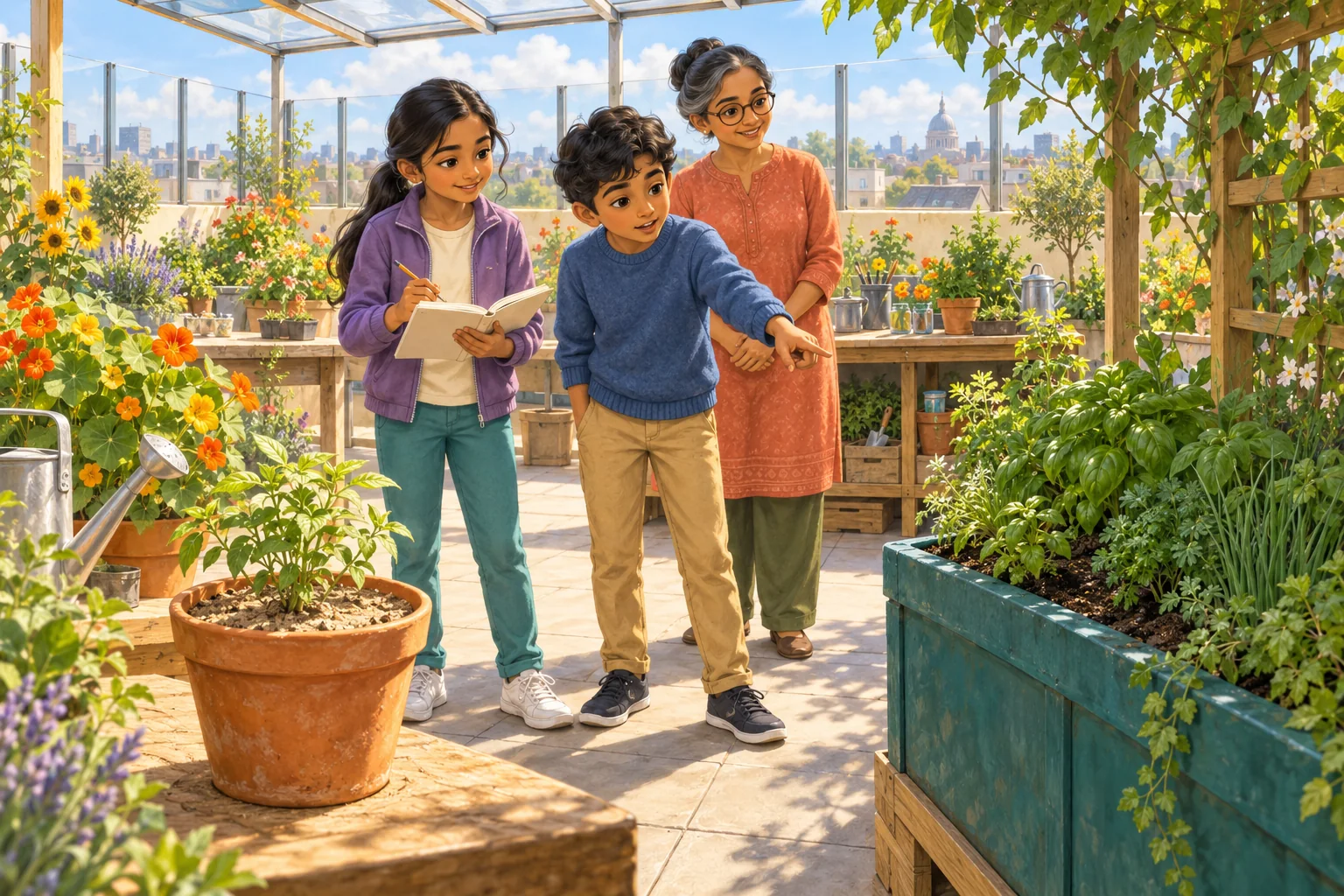
The Rooftop Water Mystery

Investigate a drying school garden with Mira and Dev. Spot an unfair comparison, design a better test and discover what the evidence can really tell you.

Practise: Plan a fair comparison & explain what the results support

waterevaporationfair testsmeasurement
Explore this story
Ages 9–12story~9 min

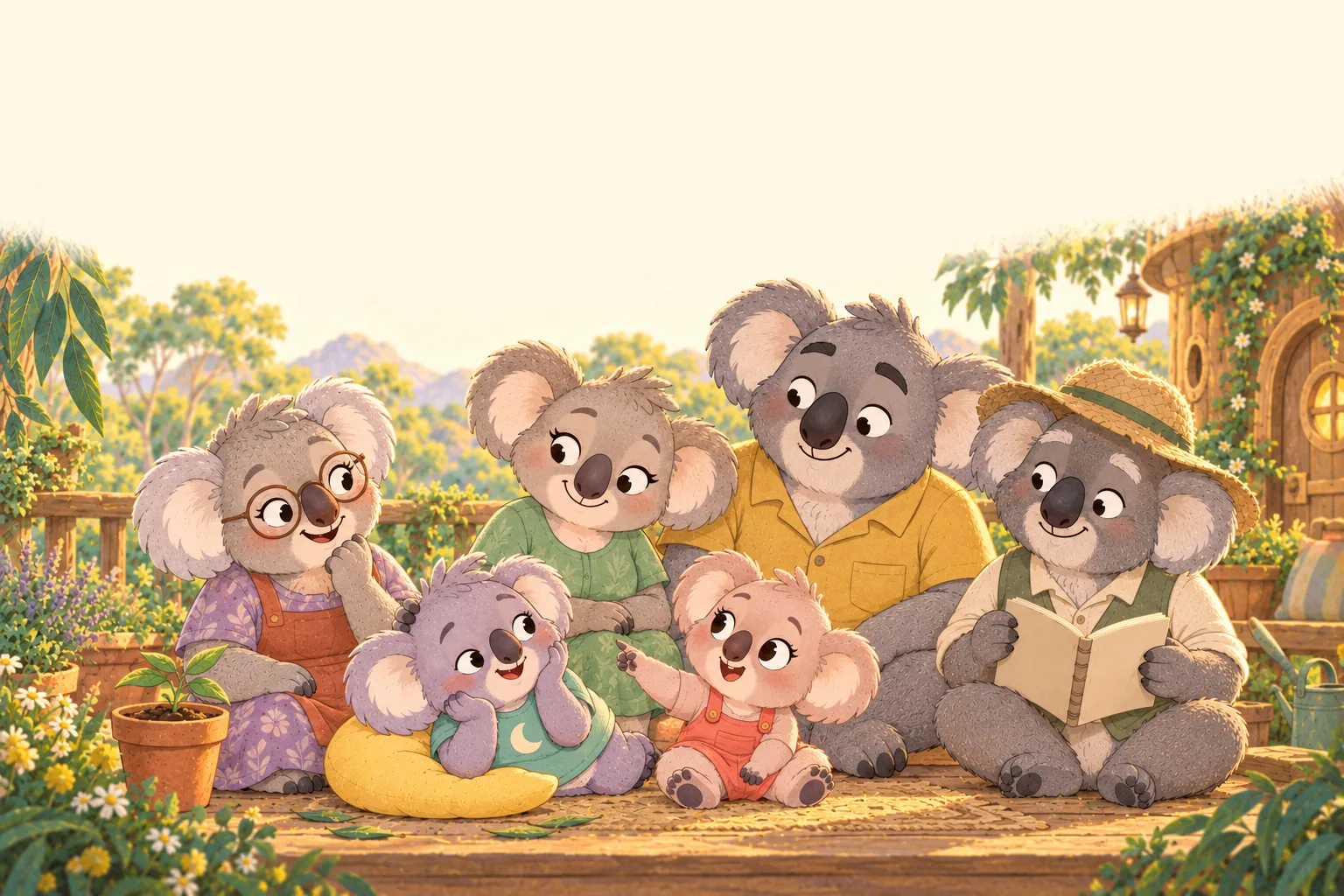
Snoozo and the Garden Detectives

Snoozo’s family investigates light with two labelled pots. Grandma and Grandpa help turn a confident guess into a careful comparison—and a better question.

Practise: Compare plants & use evidence

gardeningplantsfair testsevidence
Explore this story
Ages 9–12story~10 min

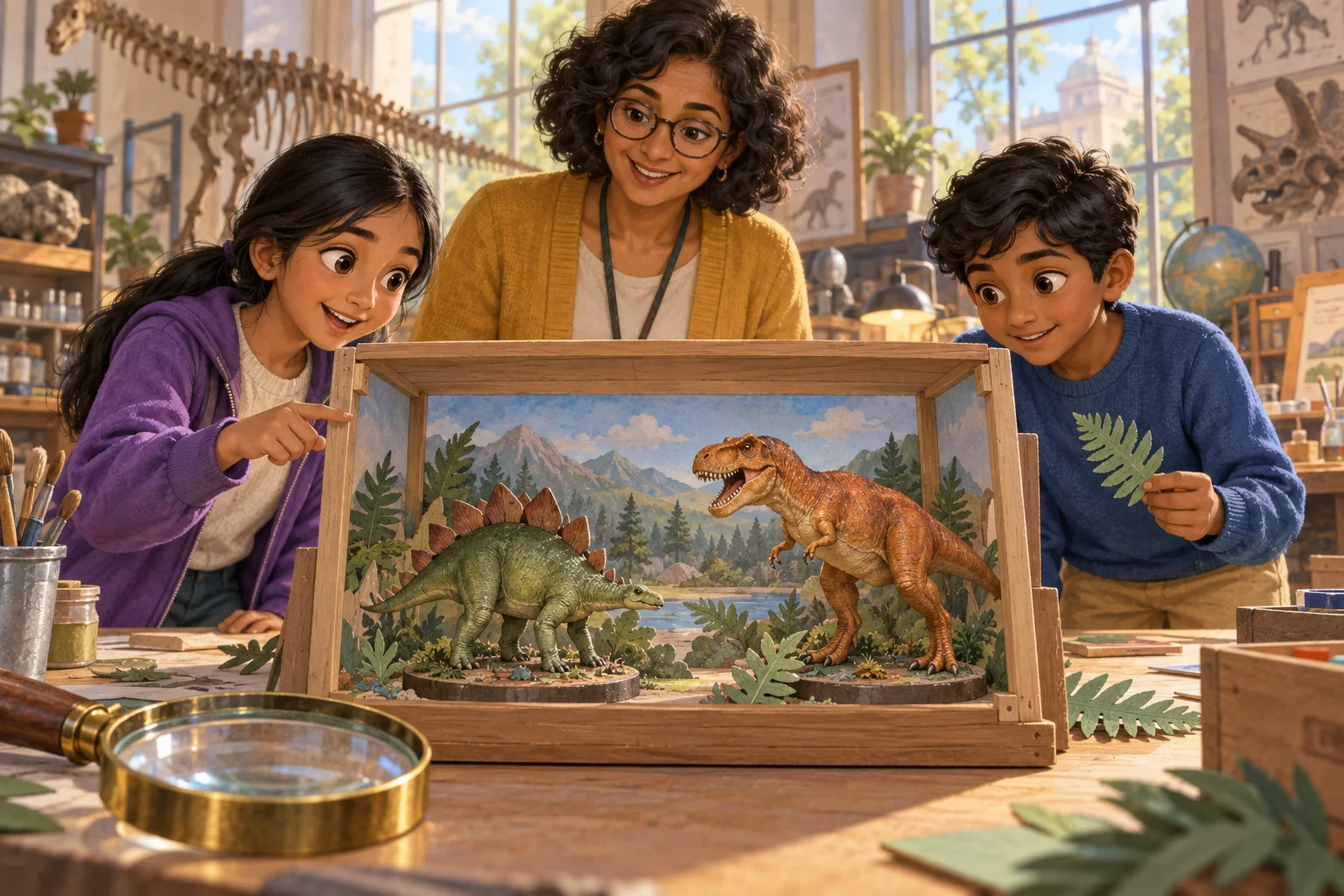
The Time-Window Mystery

Help Mira and Dev repair a museum model, separate evidence from imagination and discover why dinosaur time does not fit into one scene.

Practise: Compare dinosaur timelines & evaluate evidence

dinosaursreadingfossilstimelines
Explore this story

Before you start

Is Snoozo Learn free?

Yes. The current stories, learning games, activities and printable sampler are free to use. Snoozo Learn is free for now; no payment is needed to explore the current library.

Do we need an account?

No. You can start as a guest. Guest progress stays on the current device. An optional adult account with child profiles can save future practice across devices; guest progress is separate from those profiles.

Which languages are supported?

App navigation, core controls and family guidance support English, Hindi, Spanish, French, Portuguese, Arabic, Mandarin Chinese and Bengali. Stories, learning activities and narration are in English across the subjects. Extra Hindi text offers detailed meaning support. Recorded English narration is available for selected stories; Hindi narration is not available.

Which age range should we choose?

Start with ages 3–5, 6–8 or 9–12 according to your child’s interests and confidence. Age ranges are guides. Younger children need a grown-up to read prompts, and older English beginners can use adult reading help too.

Has the content been formally reviewed?

The learning content and translated family guidance are prototype drafts. Educator, native-language and real-child review are still pending. Snoozo Learn does not claim school-board accreditation or guaranteed learning outcomes.