SnoozoLearn

SCIENCE & NATURE · FREE FOR NOW

The Time-Window Mystery

Help Mira and Dev repair a museum model, separate evidence from imagination and discover why dinosaur time does not fit into one scene.

समय की खिड़की का रहस्य

Ages 9–12story~10 minNo guest sign-in needed
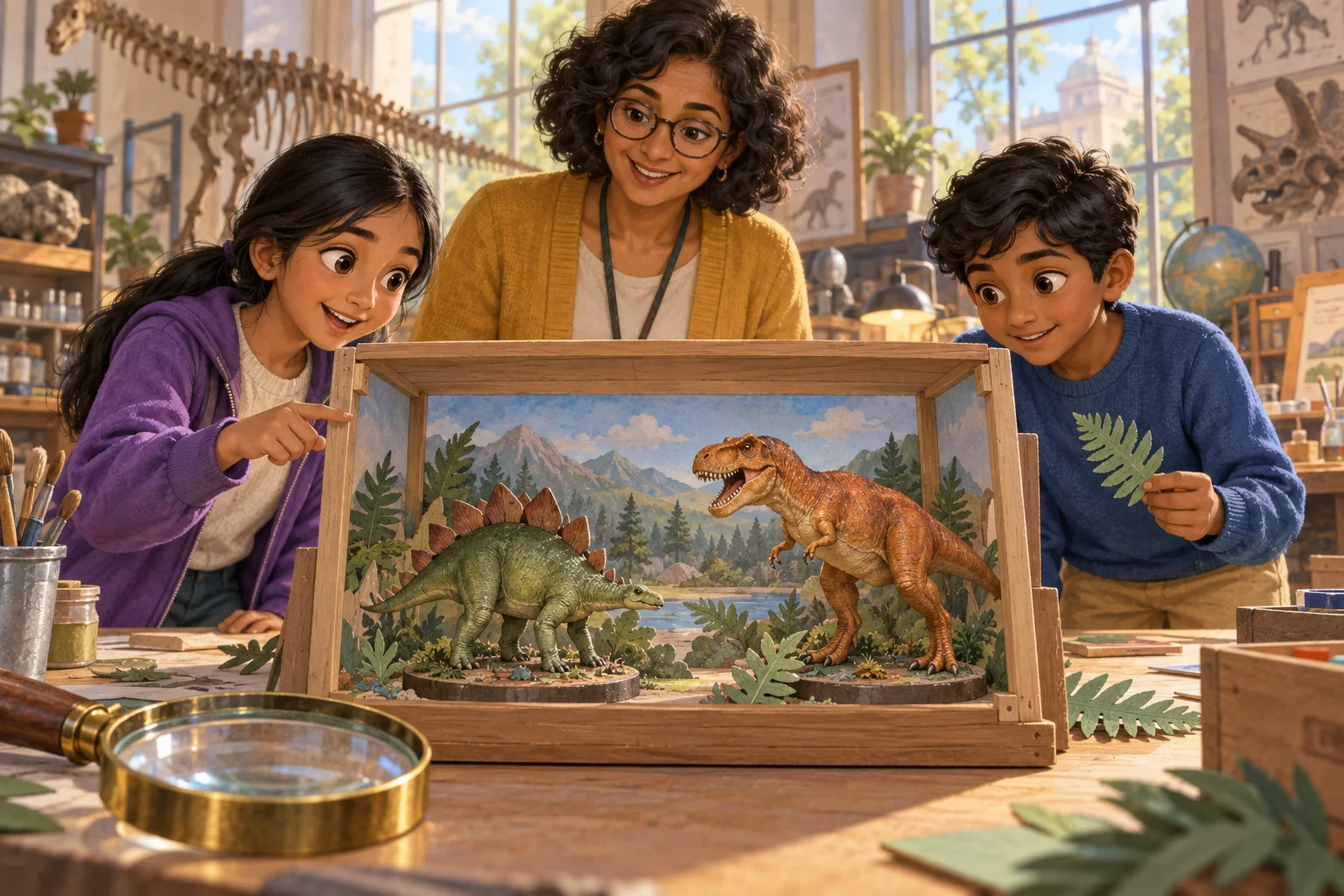
Mira, Dev and their museum guide study a deliberately mixed tabletop display with Stegosaurus and T. rex models.

6 STORY PAGES · A PREVIEW TO READ TOGETHER

Step into the story

Page 1

Mira, Dev and their museum guide study a deliberately mixed tabletop display with Stegosaurus and T. rex models.

Eleven-year-old Mira adjusted the wooden frame around their museum exhibit. “Our time-window is ready!” Dev placed a paper fern between a Stegosaurus model and a T. rex model. Their guide, Leela, leaned closer. “Beautiful work. But could these two animals have met?” Mira stopped smiling at the display and started studying it. The window was a reconstruction, not a real time machine. Had they built a convincing picture of something that never happened? They needed clues before the museum opened.

Talk together: Find the two models. What information would you check before deciding whether they belong in one scene?
Page 2

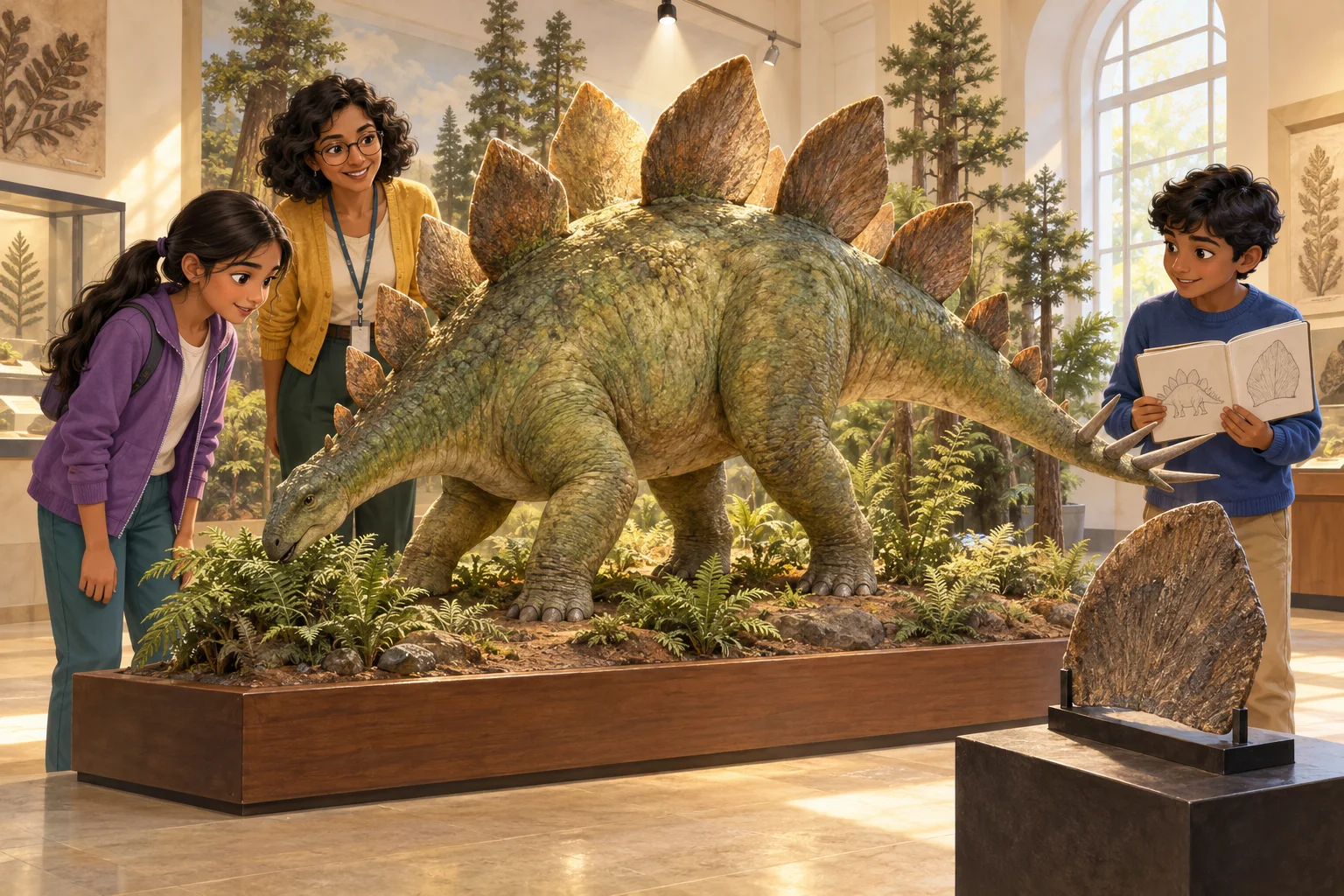
The children inspect a Stegosaurus museum model with back plates and a separate replica plate.

Leela brought a museum reference book. Stegosaurus lived in the Late Jurassic, roughly 150 million years ago. Mira examined its small head, broad back plates and spiked tail. “So the plates are not just decorations our artist invented.” Fossils preserved clues to their shapes. Dev drew the model beside a fern, then paused over his green pencil. “We have evidence for those plates. Does that mean we know their exact colour?” Leela smiled. “Keep that question. First, investigate your other visitor.”

Talk together: Compare the model’s back plates with the separate replica. Name one detail supported by fossils.

Page 3

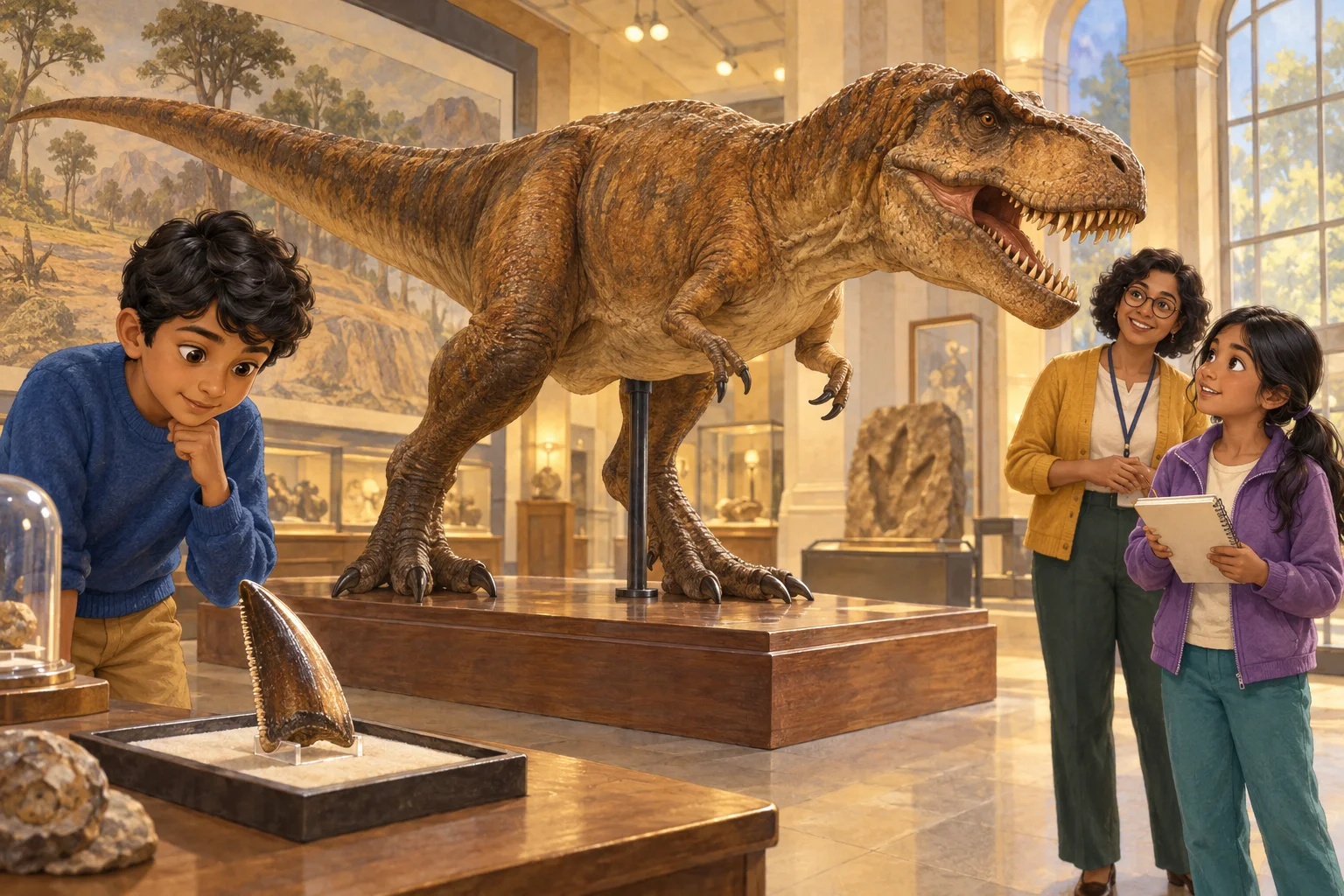
A T. rex museum model and a separate replica tooth help Mira and Dev compare fossil clues.

The T. rex belonged to the Late Cretaceous, about 68 to 66 million years ago. Dev compared a replica tooth with the pointed teeth in its model mouth. “Another clue,” he said. “And a much later animal!” Mira wrote down their approximate dates. Around 150 million and around 68 million were separated by about 82 million years. “Our models can share a table,” she said, “but these living animals could not have shared a forest.” Their beautiful scene had hidden an enormous gap in time.

Talk together: Use the approximate example dates: 150 − 68 = 82 million years. Explain why both can be dinosaurs without being neighbours.

Ages 9–12game~6 min

Time Detectives

Build a deep-time timeline and separate fossil evidence from imagination.

Practise: Geological time, classification & reasoning

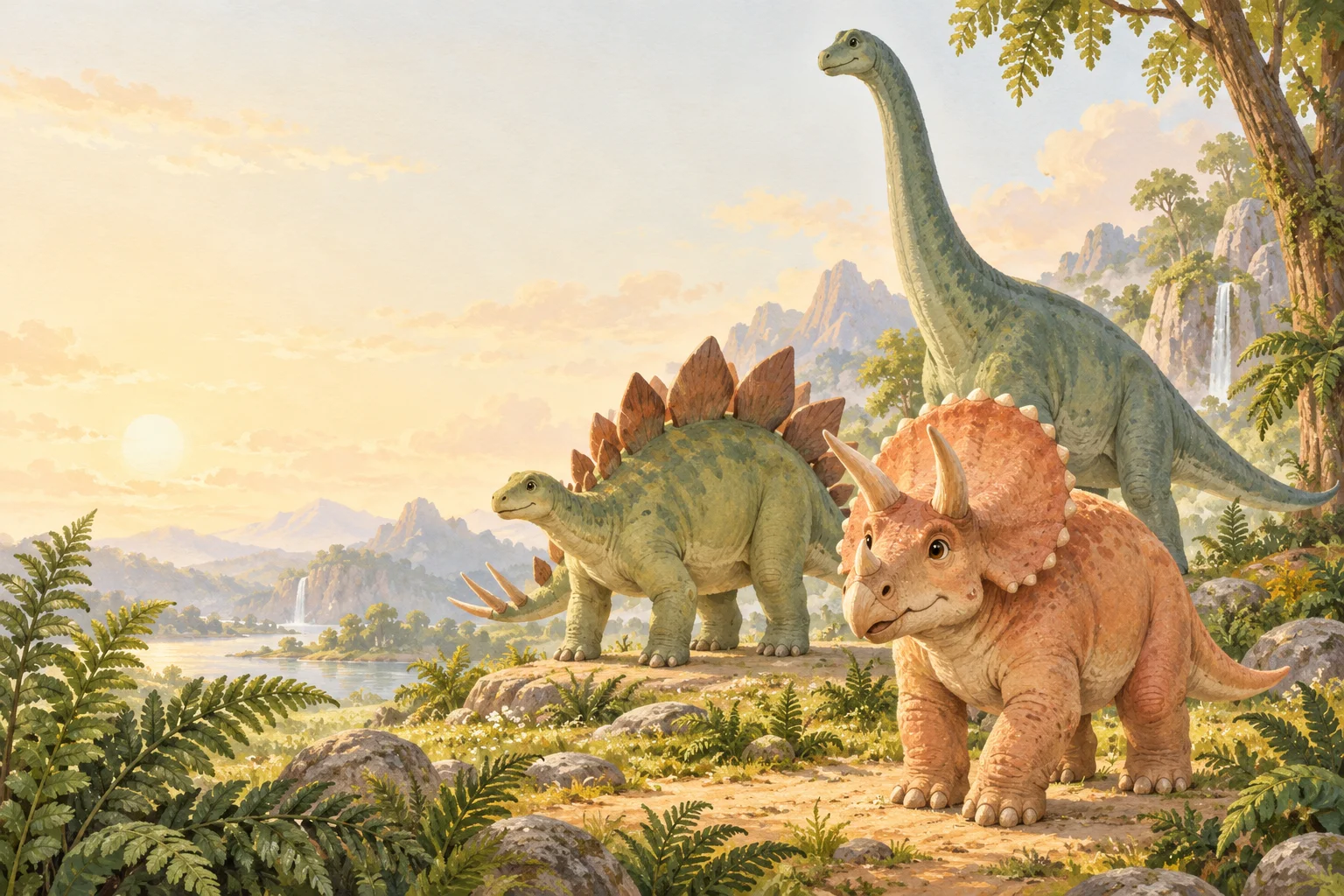
dinosaurs
Explore this game
Ages 9–12story~10 min

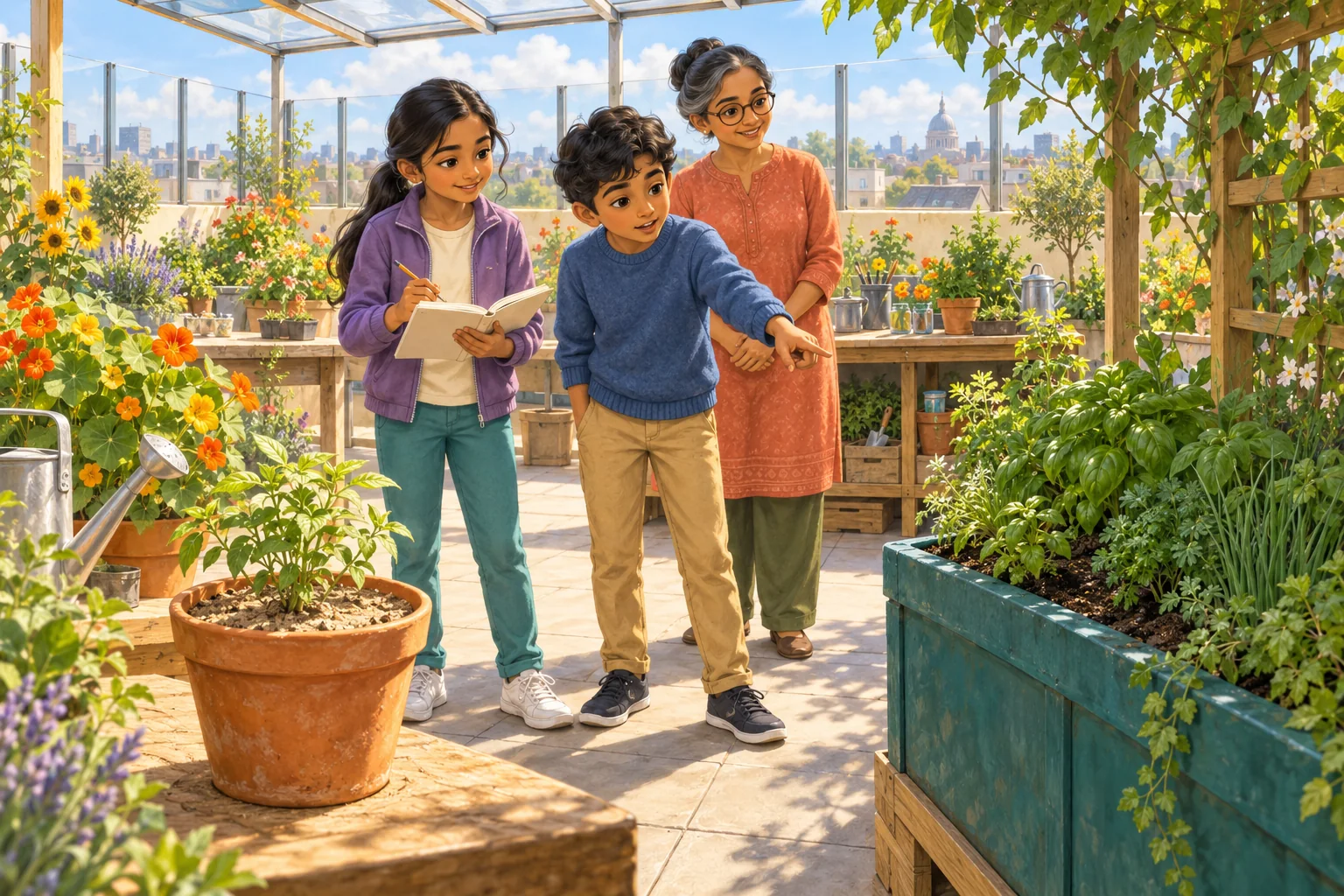
The Rooftop Water Mystery

Investigate a drying school garden with Mira and Dev. Spot an unfair comparison, design a better test and discover what the evidence can really tell you.

Practise: Plan a fair comparison & explain what the results support

waterevaporationfair testsmeasurement
Explore this story
Ages 9–12story~9 min

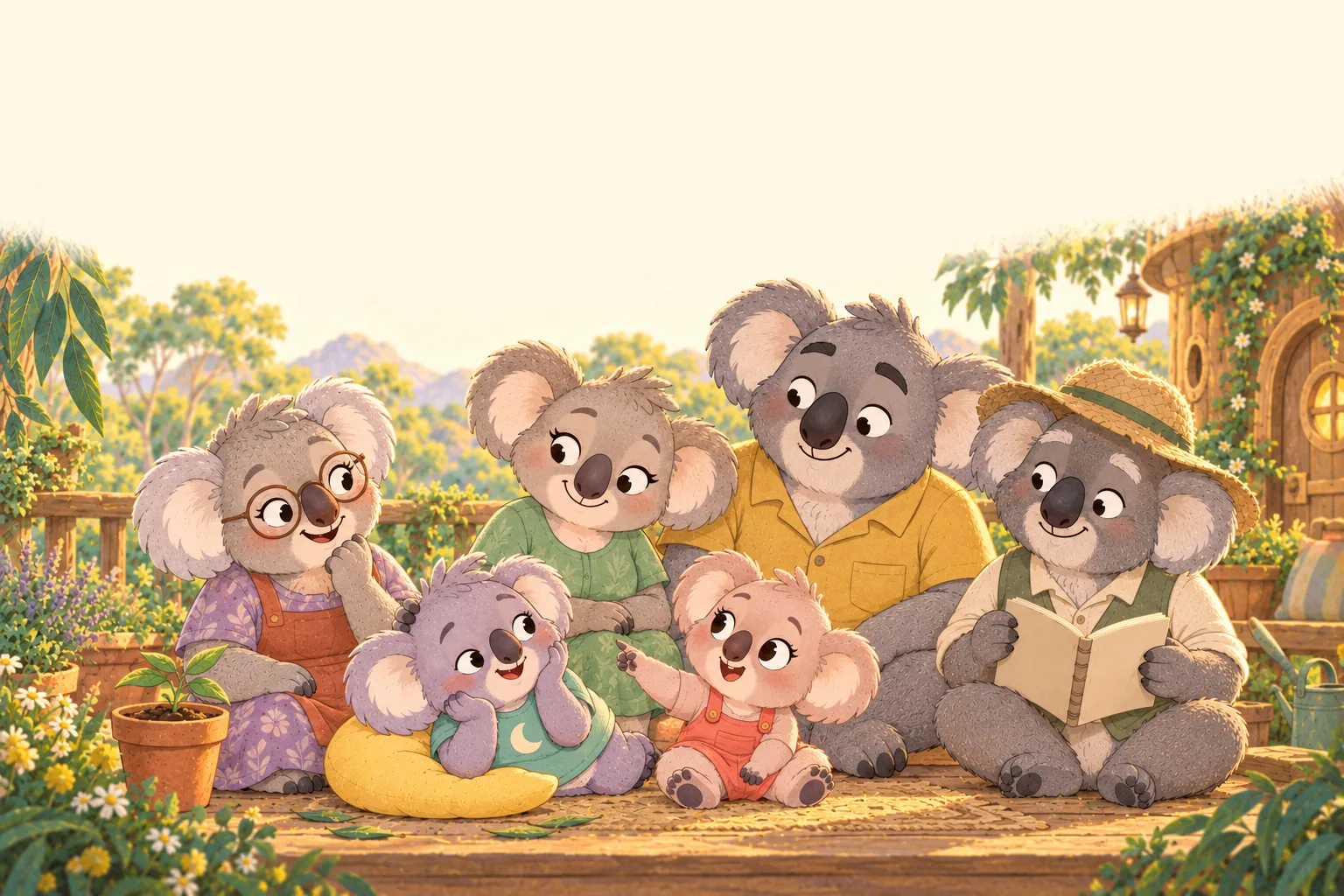
Snoozo and the Garden Detectives

Snoozo’s family investigates light with two labelled pots. Grandma and Grandpa help turn a confident guess into a careful comparison—and a better question.

Practise: Compare plants & use evidence

gardeningplantsfair testsevidence
Explore this story

Before you start

Is Snoozo Learn free?

Yes. The current stories, learning games, activities and printable sampler are free to use. Snoozo Learn is free for now; no payment is needed to explore the current library.

Do we need an account?

No. You can start as a guest. Guest progress stays on the current device. An optional adult account with child profiles can save future practice across devices; guest progress is separate from those profiles.

Which languages are supported?

App navigation, core controls and family guidance support English, Hindi, Spanish, French, Portuguese, Arabic, Mandarin Chinese and Bengali. Stories, learning activities and narration are in English across the subjects. Extra Hindi text offers detailed meaning support. Recorded English narration is available for selected stories; Hindi narration is not available.

Which age range should we choose?

Start with ages 3–5, 6–8 or 9–12 according to your child’s interests and confidence. Age ranges are guides. Younger children need a grown-up to read prompts, and older English beginners can use adult reading help too.

Has the content been formally reviewed?

The learning content and translated family guidance are prototype drafts. Educator, native-language and real-child review are still pending. Snoozo Learn does not claim school-board accreditation or guaranteed learning outcomes.