SnoozoLearn

SCIENCE & NATURE · FREE FOR NOW

The Rooftop Water Mystery

Investigate a drying school garden with Mira and Dev. Spot an unfair comparison, design a better test and discover what the evidence can really tell you.

छत के बगीचे में पानी का रहस्य

Ages 9–12story~10 minNo guest sign-in needed
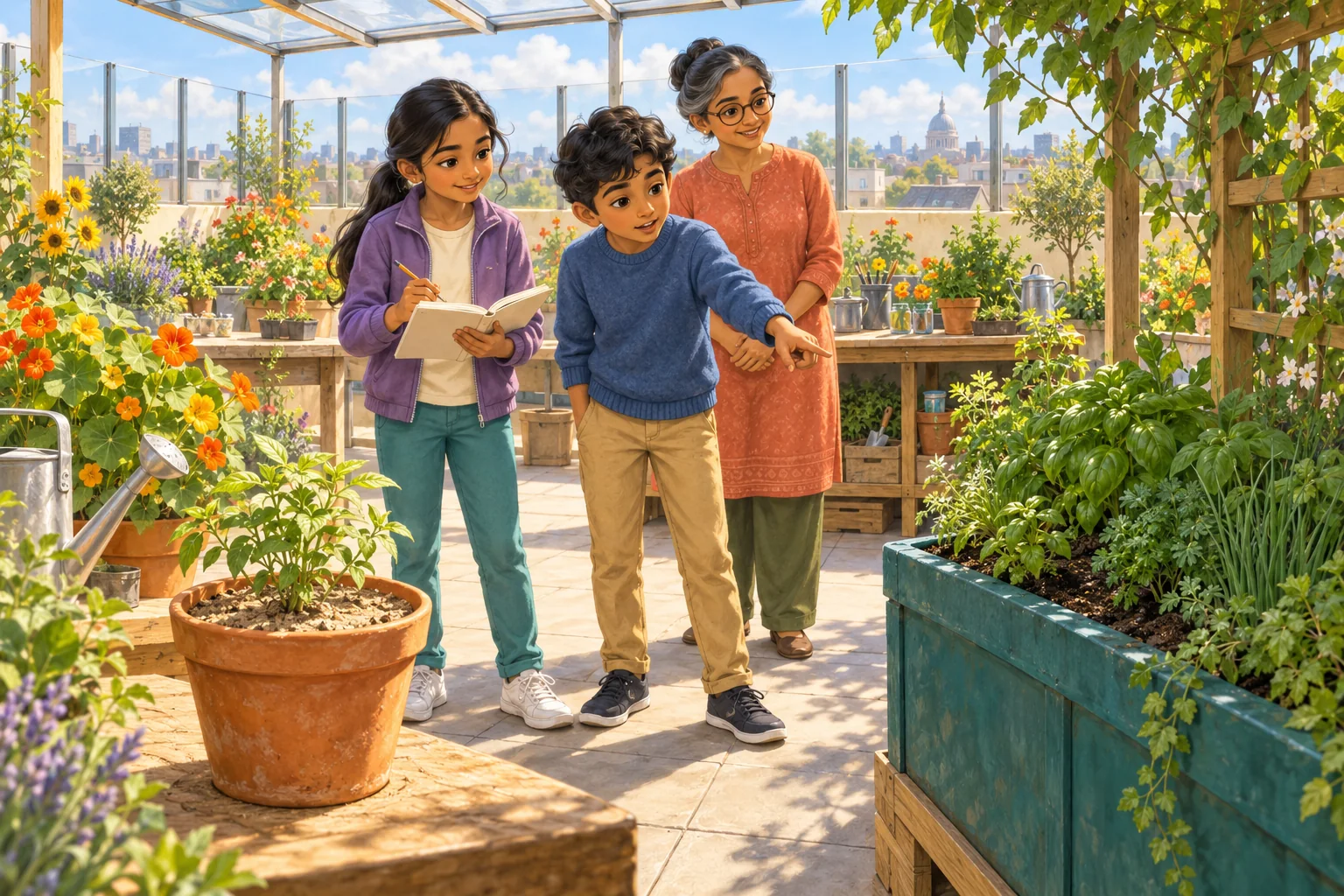
Mira, Dev and their teacher Ms Sen compare a small sunny planter with a larger shaded planter inside their enclosed school rooftop garden.

6 STORY PAGES · A PREVIEW TO READ TOGETHER

Step into the story

Page 1

Mira, Dev and their teacher Ms Sen compare a small sunny planter with a larger shaded planter inside their enclosed school rooftop garden.

The school’s rooftop garden had a mystery. One planter looked dry; another still held dark, damp soil. Mira and Dev stood inside the enclosed garden with their teacher, Ms Sen. “The dry one gets more sun,” Dev noticed. “Then sunshine must be the whole answer!” Mira nearly agreed. But their gardening notebook showed that the two planters had not been cared for in exactly the same way. Before changing the watering plan, they needed a better question.

Talk together: Separate an observation from an explanation. What did Dev see, and what did he assume?
Page 2

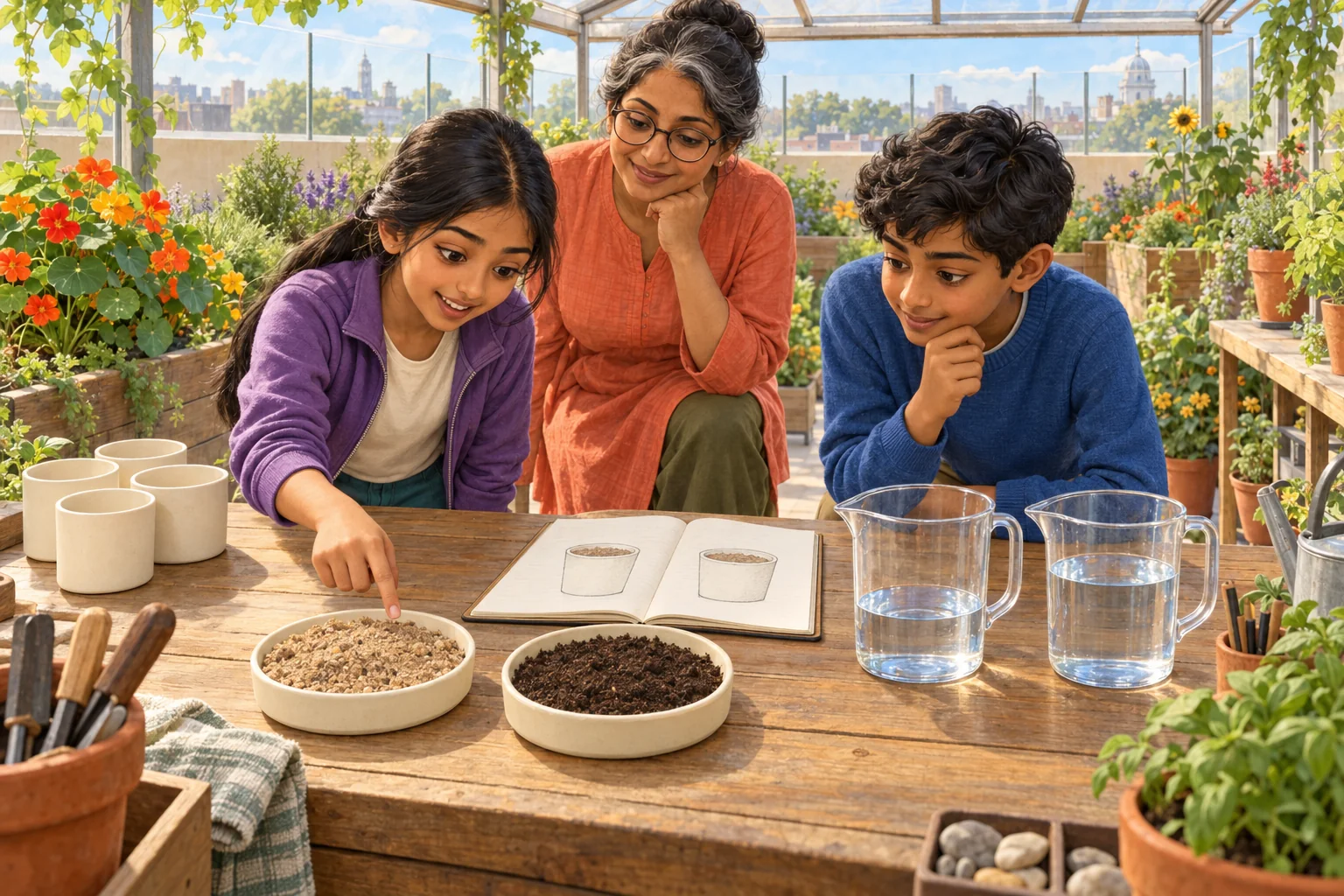
The friends examine different soil mixtures and unequal watering measures, discovering why their first comparison was unfair.

They compared the clues. The sunny planter was smaller and held a sandier soil mixture. Yesterday it had also received less water. “We changed several variables,” Mira said. “A variable is something that can differ.” Their first comparison could not show which difference mattered most. Ms Sen brought four matching empty pots. “Can we test just the effect of shade on soil-water loss?” Dev opened a fresh notebook page. This time, they would plan before guessing.

Talk together: Name three differences that made their first comparison unfair. Which one will their new test deliberately change?

Page 3

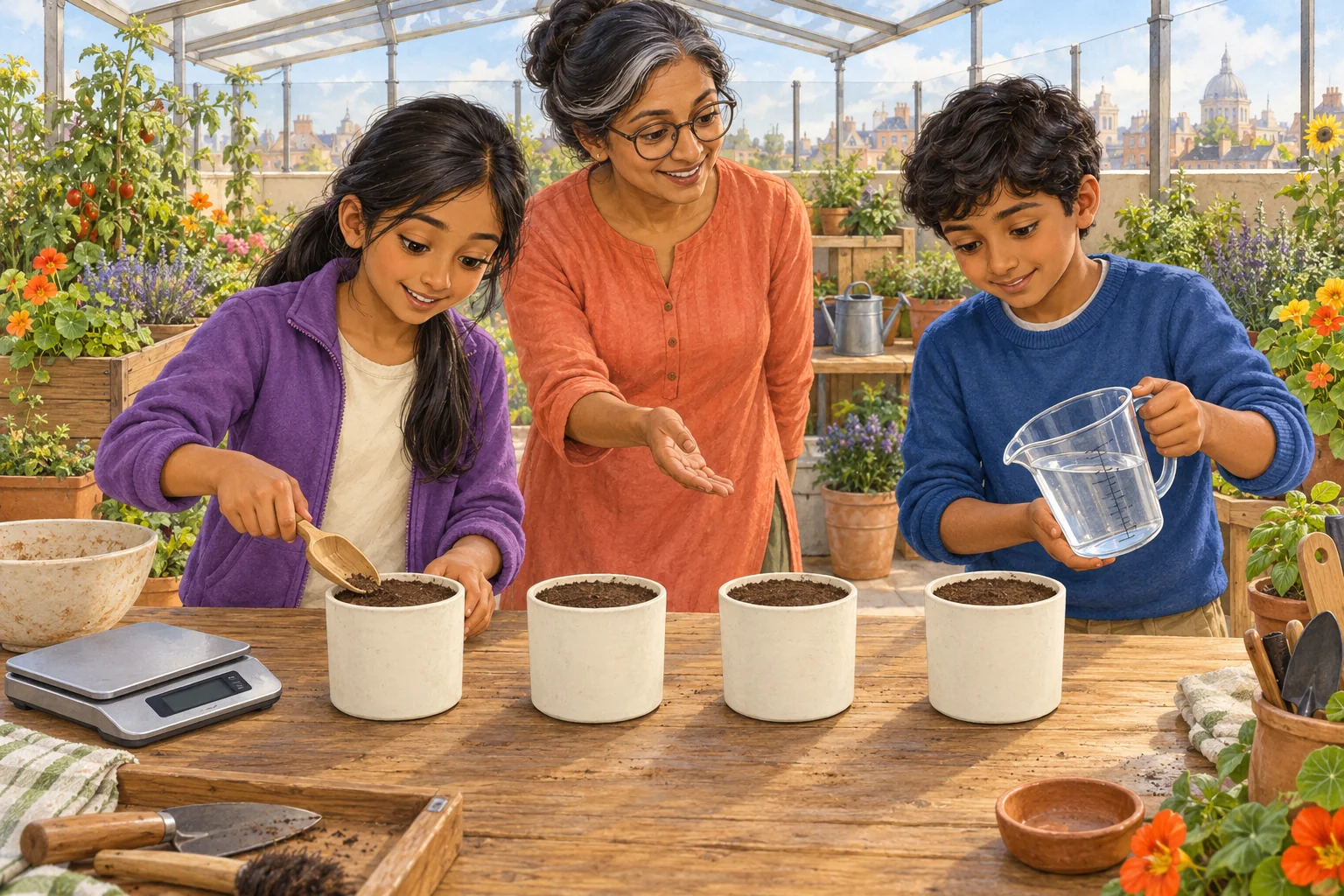
With Ms Sen supervising, Mira and Dev prepare four matching pots of soil and measure equal water for a controlled comparison.

With Ms Sen, they put equal masses of the same mixed soil into four identical pots with sealed bases. Each received the same measured amount of water. No plants went into these test pots: they were investigating soil drying, while the growing plants kept receiving normal care. They weighed every pot and recorded its starting mass. Two would stay sunny; two would sit beneath a small, open-sided shade screen. Two pots in each group could reveal an odd result.

Talk together: Explain why the soil, pots and starting water must match. What extra information can a second pot in each group provide?

Ages 9–12game~5 min

Water Detectives

Explain floating, follow water changes, and solve a saving puzzle.

Practise: Density, state changes & conservation

waterfloating
Explore this game
Ages 9–12story~9 min

Snoozo and the Garden Detectives

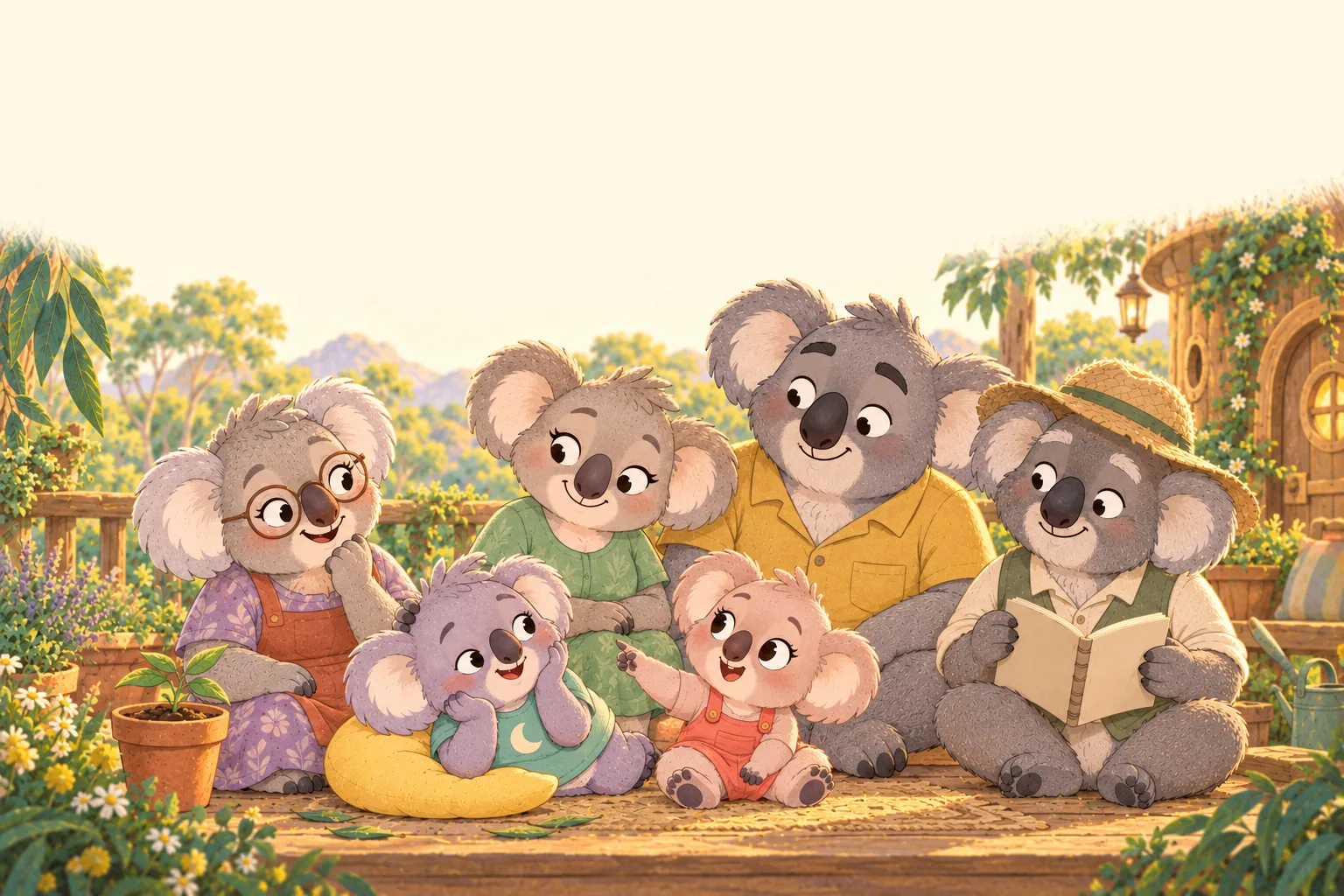
Snoozo’s family investigates light with two labelled pots. Grandma and Grandpa help turn a confident guess into a careful comparison—and a better question.

Practise: Compare plants & use evidence

gardeningplantsfair testsevidence
Explore this story
Ages 9–12story~9 min

Snoozo and the Body Detectives

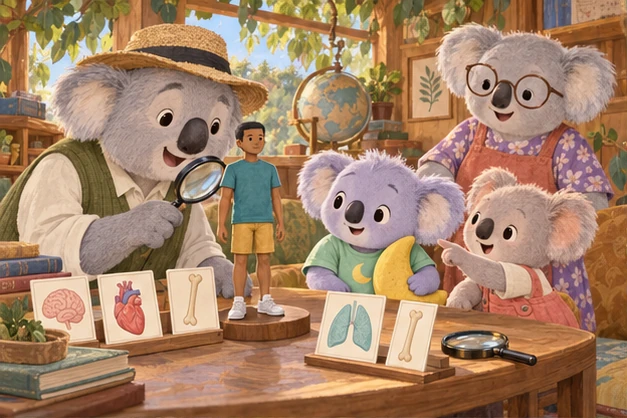
Switch the layers of a human body model and investigate bones, joints, tendons, skin layers and the teamwork of lungs, heart and brain.

Practise: Discover how parts of the body work together

human bodybody systemsbones
Explore this story

Before you start

Is Snoozo Learn free?

Yes. The current stories, learning games, activities and printable sampler are free to use. Snoozo Learn is free for now; no payment is needed to explore the current library.

Do we need an account?

No. You can start as a guest. Guest progress stays on the current device. An optional adult account with child profiles can save future practice across devices; guest progress is separate from those profiles.

Which languages are supported?

App navigation, core controls and family guidance support English, Hindi, Spanish, French, Portuguese, Arabic, Mandarin Chinese and Bengali. Stories, learning activities and narration are in English across the subjects. Extra Hindi text offers detailed meaning support. Recorded English narration is available for selected stories; Hindi narration is not available.

Which age range should we choose?

Start with ages 3–5, 6–8 or 9–12 according to your child’s interests and confidence. Age ranges are guides. Younger children need a grown-up to read prompts, and older English beginners can use adult reading help too.

Has the content been formally reviewed?

The learning content and translated family guidance are prototype drafts. Educator, native-language and real-child review are still pending. Snoozo Learn does not claim school-board accreditation or guaranteed learning outcomes.