SnoozoLearn

MATHS · FREE FOR NOW

The Fairground Fraction Fix

Asha and Dev have a makers’ fair to decorate, but their “halves” do not match. Follow a paper-banner mystery through equal wholes, equivalent fractions and a repair they can explain.

मेले के बैनर की भिन्न वाली पहेली

Ages 9–12story~8 minNo guest sign-in needed
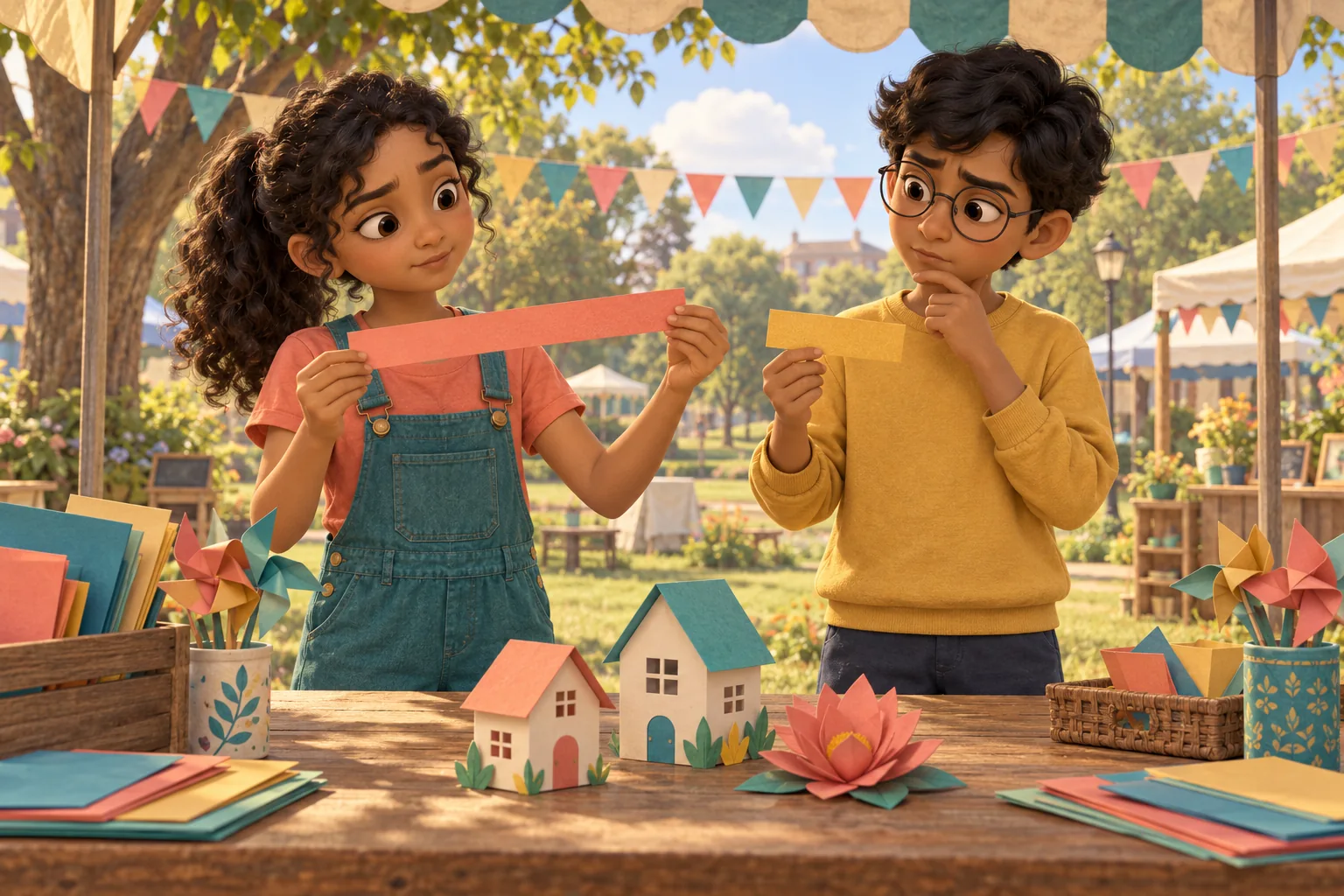
Asha and Dev compare different-sized colourful paper pieces at their makers’ fair stall; the craft scene is not a scale fraction diagram.

6 STORY PAGES · A PREVIEW TO READ TOGETHER

Step into the story

Page 1

Asha and Dev compare different-sized colourful paper pieces at their makers’ fair stall; the craft scene is not a scale fraction diagram.

The makers’ fair opened in an hour, and Asha and Dev were decorating their paper-model stall. Each had brought what they called half a banner strip. Asha’s piece was longer. “We both brought a half,” Dev said. “How can one be bigger?” They placed the pieces side by side. The problem was small enough to hide beneath a flower decoration, but Asha stopped. “Before we cover it up, let’s work out what our halves mean.”

Talk together: Both children say “half”. What would you need to know before deciding whether their pieces should be the same size?
Page 2

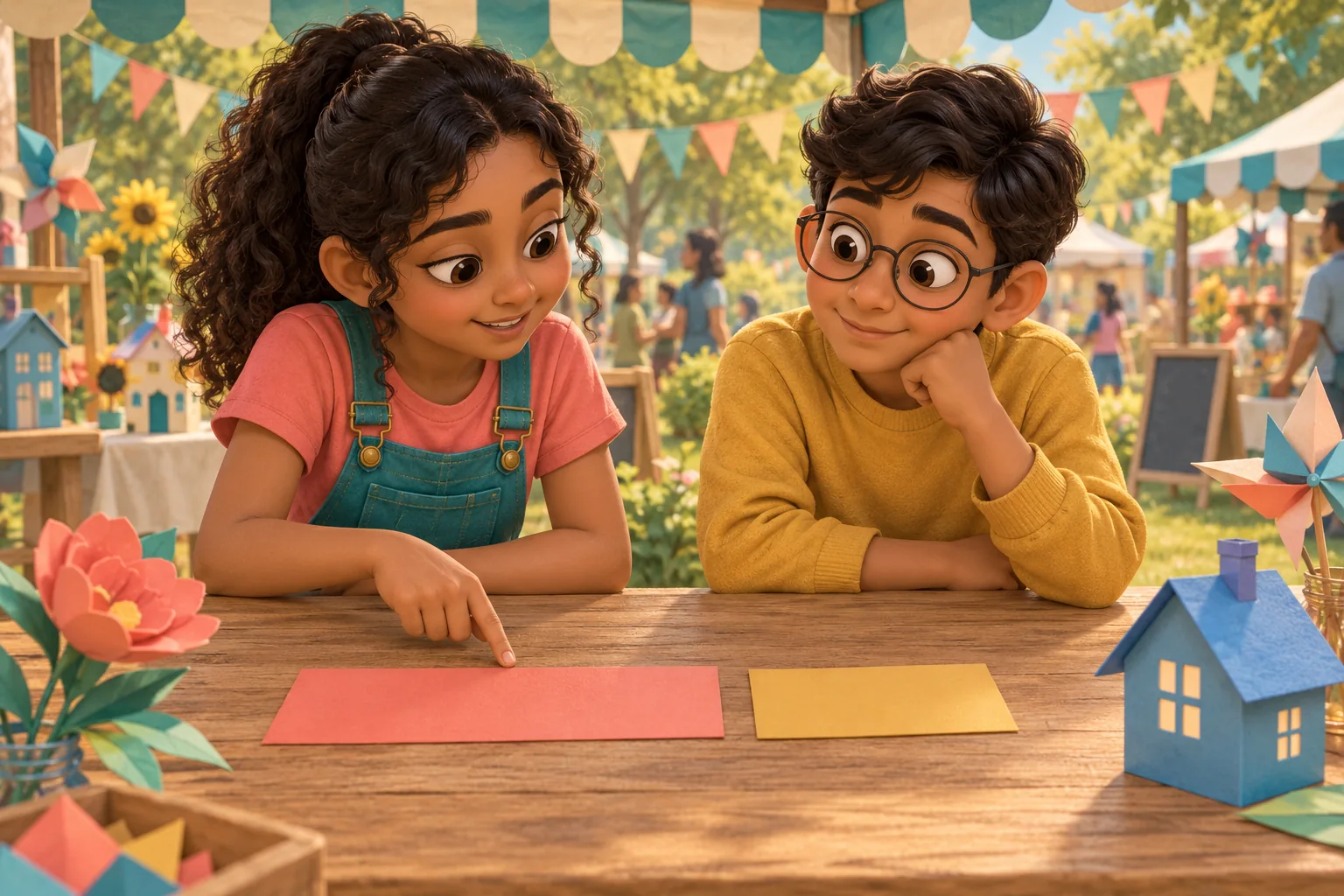
The children discover that their original blank paper strips have different lengths and discuss why their pieces do not match.

They fetched the original paper strips. Asha had started with a long strip; Dev’s had been shorter. Each child had divided their own strip into two equal parts. Both pieces really were halves, but they were halves of different wholes. “A half tells us a relationship,” Asha said. “It does not always tell us one fixed length.” Dev nodded. To compare their banner pieces fairly, they first needed to agree on the same-sized whole.

Talk together: Could half of a long ribbon be longer than half of a short ribbon? Explain without measuring either ribbon.

Page 3

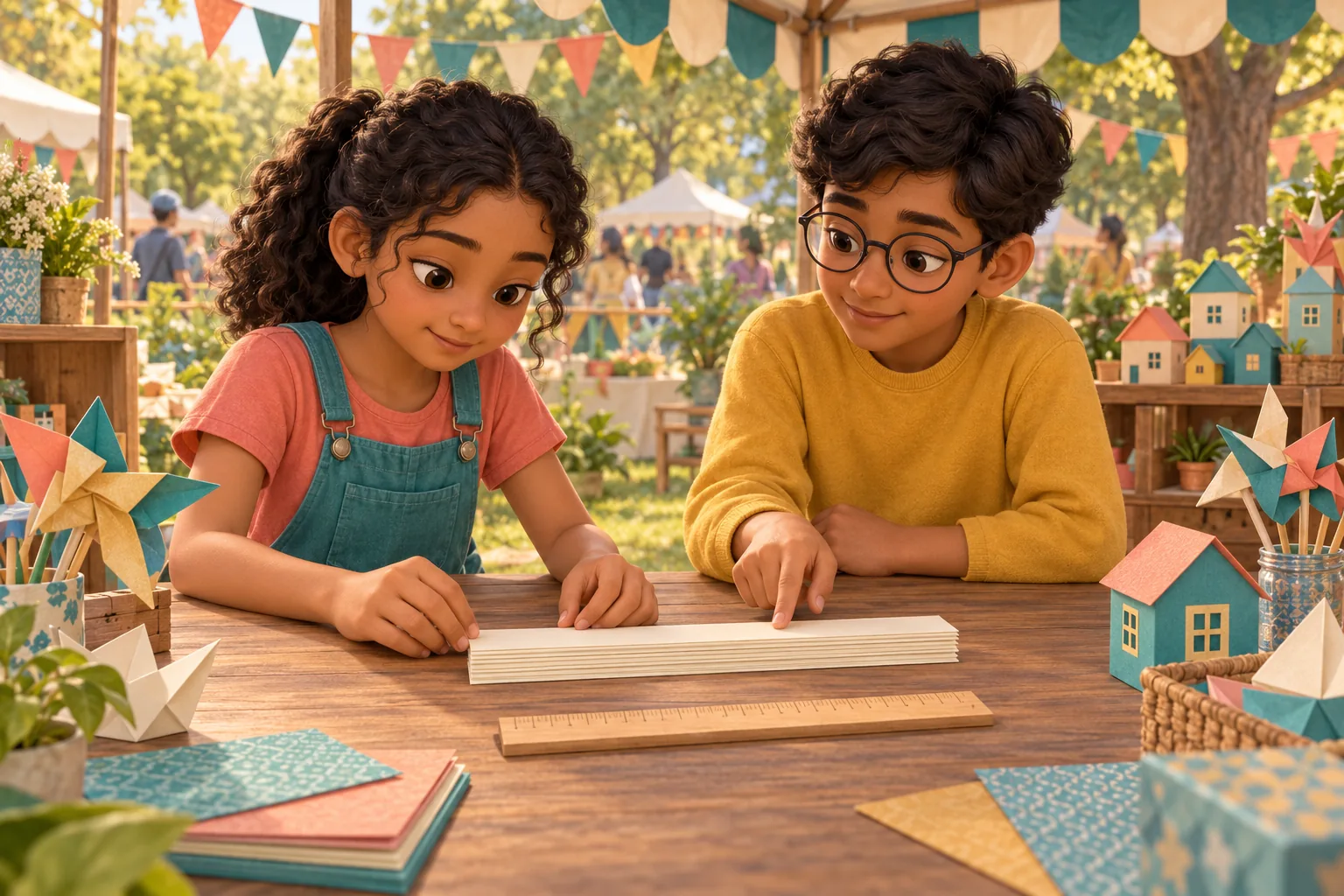
Asha and Dev line up blank paper strips with a ruler on the craft table before making a precise fraction model.

Asha chose one blank strip as their whole. They made matching copies and lined up the ends to check that every copy had the same length and width. One copy would be divided into two equal parts, another into four and another into eight. “Equal parts within each whole,” Dev reminded himself. “Same-sized wholes across our comparison.” Their craft supplies were ready. Now they needed a careful fraction model to show those equal parts clearly.

Talk together: Why do we need both rules: equal parts in each strip and the same-sized whole across the strips?

Ages 9–12game~5 min

Fraction Flight

Power a skyship with equal parts, equivalent fractions and sharing.

Practise: Fractions & equal parts

fractionsequal parts
Explore this game
Ages 9–12game~5 min

Number Code Club

Crack growing differences, decimal order and number clues.

Practise: Pattern rules, decimals & divisibility

patternsdecimalsnumber clues
Explore this game

Before you start

Is Snoozo Learn free?

Yes. The current stories, learning games, activities and printable sampler are free to use. Snoozo Learn is free for now; no payment is needed to explore the current library.

Do we need an account?

No. You can start as a guest. Guest progress stays on the current device. An optional adult account with child profiles can save future practice across devices; guest progress is separate from those profiles.

Which languages are supported?

App navigation, core controls and family guidance support English, Hindi, Spanish, French, Portuguese, Arabic, Mandarin Chinese and Bengali. Stories, learning activities and narration are in English across the subjects. Extra Hindi text offers detailed meaning support. Recorded English narration is available for selected stories; Hindi narration is not available.

Which age range should we choose?

Start with ages 3–5, 6–8 or 9–12 according to your child’s interests and confidence. Age ranges are guides. Younger children need a grown-up to read prompts, and older English beginners can use adult reading help too.

Has the content been formally reviewed?

The learning content and translated family guidance are prototype drafts. Educator, native-language and real-child review are still pending. Snoozo Learn does not claim school-board accreditation or guaranteed learning outcomes.